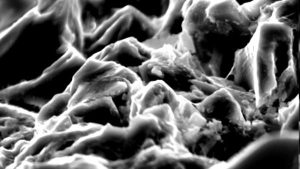
Modern toothpastes rely on abrasives to remove plaque, food debris, and extrinsic stains from the tooth surface. In addition to cleaning, these abrasives help smooth the enamel surface, making it more difficult for plaque and bacteria to accumulate. Among the various abrasive systems available, silica-based abrasives are the most widely used, with hydrated silica serving as the industry standard in many toothpaste formulations.
Nano Silica: Redefining Toothpaste Abrasion
Why Are Silica-Based Abrasives Preferred?
Silica-based abrasives offer formulators a high degree of control over cleaning performance. By adjusting particle size, structure, and concentration, manufacturers can achieve effective stain removal while maintaining acceptable levels of enamel and dentin abrasion. They also help provide the desired consistency, ensuring that toothpaste remains stable, easy to dispense, and resistant to phase separation during storage.
What Is Hydrated Silica?
Hydrated silica is an amorphous form of silicon dioxide that contains chemically bound water. It is widely used in oral care products because it provides an effective balance between cleaning efficiency and enamel safety. Beyond its abrasive properties, hydrated silica contributes to formulation stability and texture. The presence of bound water helps maintain a smooth, consistent paste throughout the product’s shelf life, making hydrated silica a versatile ingredient in modern toothpaste formulations.
What Makes Nano Silica the Future of Toothpaste Abrasives?
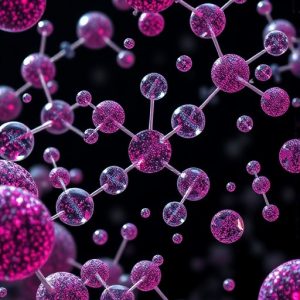
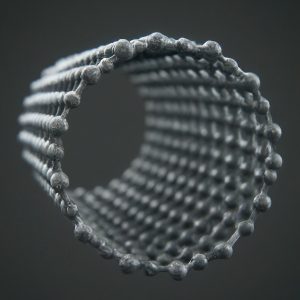
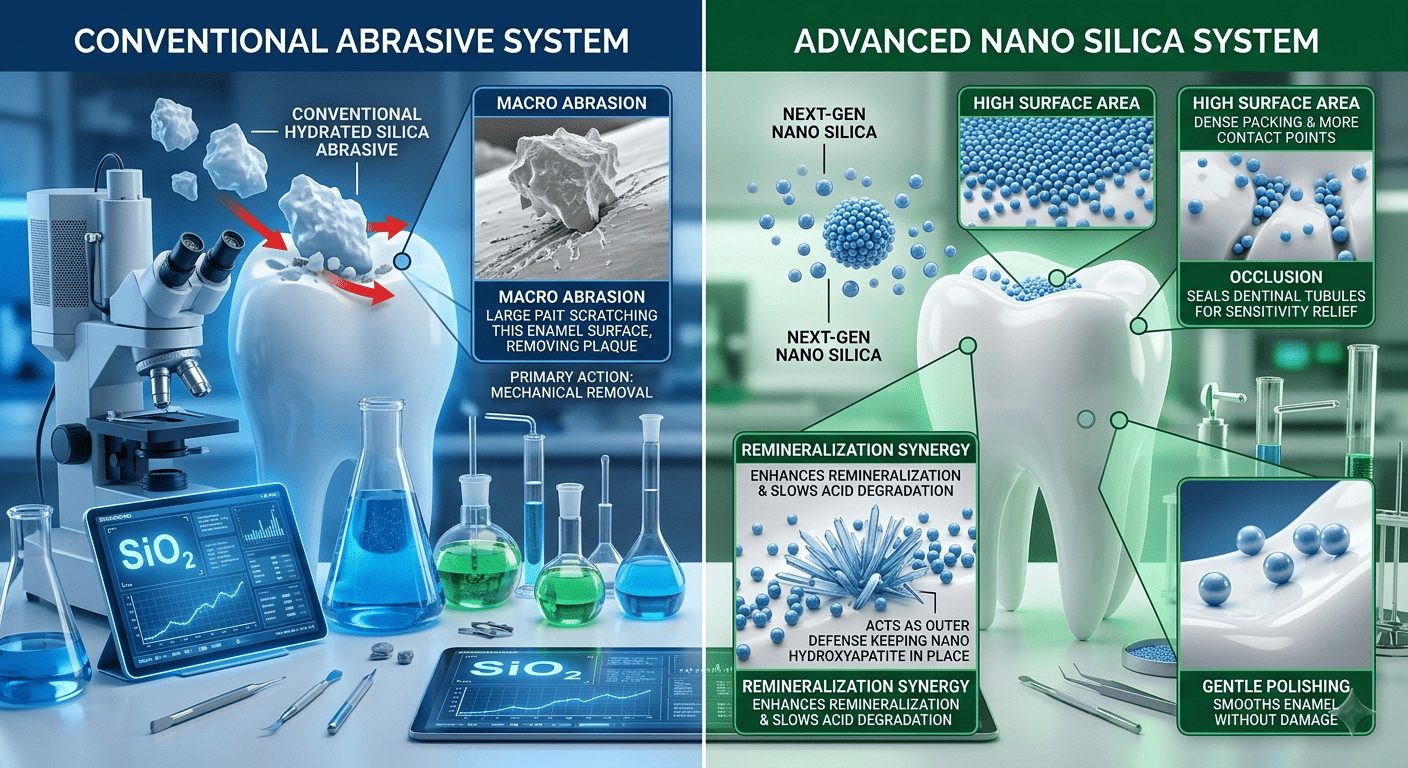
Nano silica is an ultra-fine form of silica with particle sizes ranging from approximately 20 to 50 nm. It’s extremely small size results in a significantly larger surface area compared to conventional hydrated silica, enabling enhanced interactions with tooth surfaces and oral care ingredients. These properties make nano silica a promising material for next-generation toothpaste formulations that demand both superior cleaning performance and functional benefits beyond abrasion.
Dual Functionality: Cleaning and Sensitivity Relief
While nano silica offers abrasive qualities, its incredibly small particle size allows it to perform additional functions in oral care formulations. Nano-sized particles can help reduce tooth sensitivity by physically occluding exposed dentinal tubules, thereby blocking external stimuli that cause pain when teeth are exposed to hot, cold, sweet, or acidic substances.
This mechanism provides a potential alternative to traditional desensitising agents such as potassium nitrate, which primarily masks sensitivity symptoms rather than physically protecting exposed dentinal tubules.
Working Together: Nano Silica + Hydroxyapatite
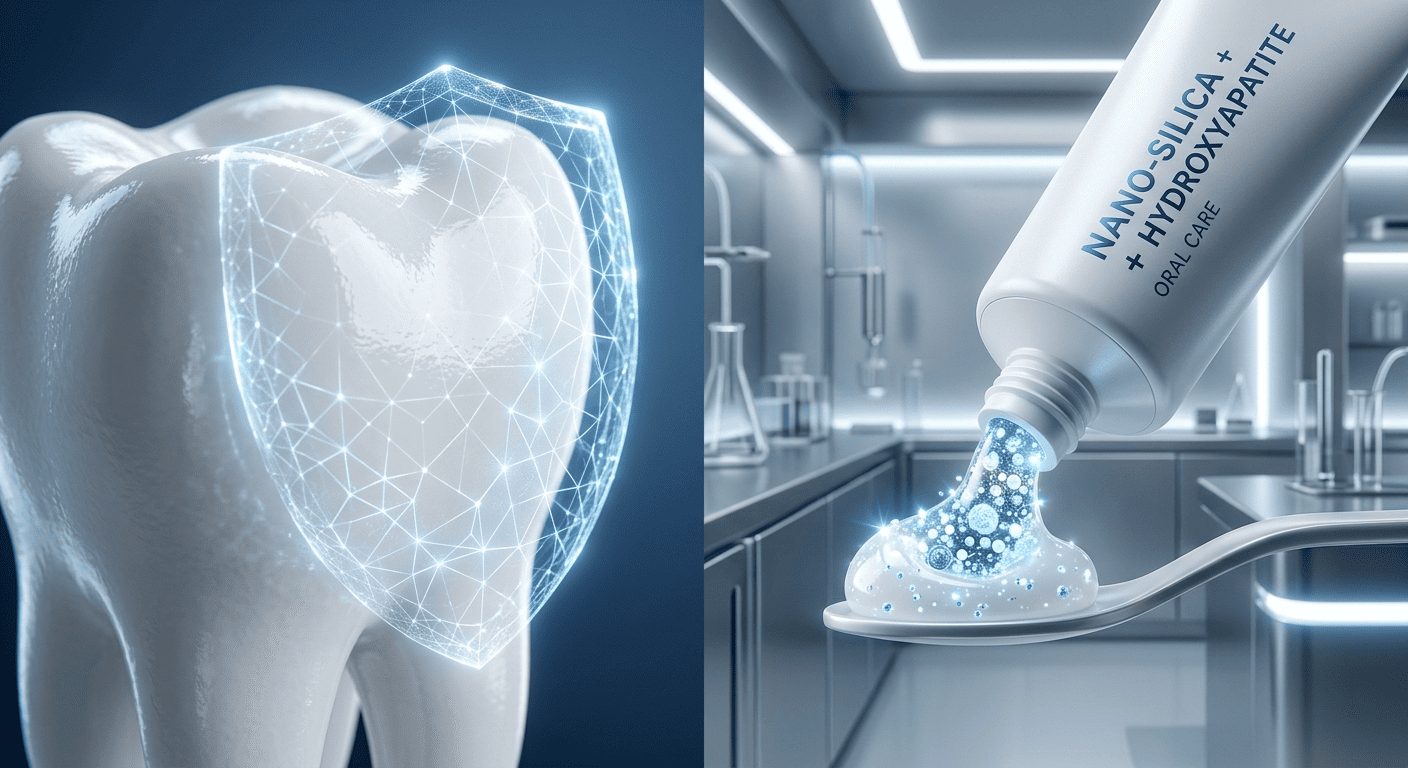
Pairing nano silica with Nano Hydroxyapatite a biomimetic mineral that rebuilds enamel creates a powerful synergy. Hydroxyapatite restores lost minerals, while nano silica helps anchor it to the tooth surface and protect against acid erosion. Together, they form a multifunctional system that cleans, repairs, and shields teeth.
Comparing the Two
Hydrated Silica: Proven, cost‑effective, flexible, and safe. It remains the backbone of most toothpaste formulations.
Nano Silica: Offers higher surface area, gentler abrasion, better polishing, and added benefits like sensitivity relief and enamel protection. It’s especially appealing for premium, next‑gen oral care products.
The Future of Oral Care
While hydrated silica continues to dominate conventional toothpaste formulations, nano silica is increasingly emerging as a next-generation functional ingredient. Its unique combination of cleaning efficiency, polishing capability, sensitivity management, and compatibility with remineralisation technologies positions it as a promising material for the future of oral care.
As consumer demand grows for multifunctional toothpastes that do more than simply clean teeth, nano silica is expected to play an increasingly important role in advanced oral care formulations designed to protect, repair, and strengthen enamel.

 While nano silica offers abrasive qualities, its incredibly small particle size allows it to perform additional functions in oral care formulations. Nano-sized particles can help reduce tooth sensitivity by physically occluding exposed dentinal tubules, thereby blocking external stimuli that cause pain when teeth are exposed to hot, cold, sweet, or acidic substances.
 Pairing nano silica with Nano Hydroxyapatite a biomimetic mineral that rebuilds enamel creates a powerful synergy. Hydroxyapatite restores lost minerals, while nano silica helps anchor it to the tooth surface and protect against acid erosion. Together, they form a multifunctional system that cleans, repairs, and shields teeth.